| Lesson 2 | Internet Connection |
| Objective | Describe the components of the Internet |
Internet Connection Components
The Internet Connection
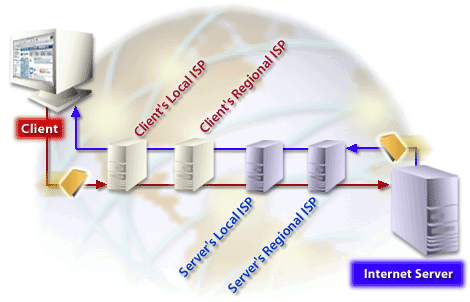
There are three parts to an Internet connection:
This configuration is called the client/server model. In the client/server model, one program requests a service from another program. The client makes a request; the server answers the request with a service. The client and server communicate with each other by both physical (hardware) and logical (software) links.
- The client
- The server
- The connection linking them
This configuration is called the client/server model. In the client/server model, one program requests a service from another program. The client makes a request; the server answers the request with a service. The client and server communicate with each other by both physical (hardware) and logical (software) links.
Role of the Client
In the sprawling and complex tapestry of the Internet, each device, service, and piece of software fulfills a specific role in ensuring seamless communication and interaction. One of the most vital roles is that of the client, a key actor within the client-server model, which forms the foundational architecture of most internet systems today.
The client, in the digital parlance, is a computer program, or in a broader sense, the device that runs this program, which requests services or resources from a server. The server, in turn, is a program or a device running a program that provides these requested services or resources to the client. This interaction, often compared to a restaurant diner (client) placing an order to a waiter (server), underpins the functionality of the World Wide Web, email, file sharing, and other Internet-based services.
The client's role within this dynamic is critical. Firstly, it initiates communication with servers. Whether you're sending an email, browsing a webpage, or streaming a video, the process begins with the client making a request to a server. Without this initiation, the servers would remain idle, their reservoirs of information untapped.
The client is also responsible for interpreting and displaying the data it receives from the server. When you open a webpage on your browser, your browser (acting as the client) sends a request to the server hosting the website. The server responds with the necessary files — text, images, scripts, etc. — and your browser interprets these files to construct and display the webpage. The client is therefore vital in translating the raw data into a form that is comprehensible and usable for end users.
Furthermore, the client ensures the personalization and localization of Internet experiences. Each client can request different resources from the same server, depending on the user's needs or preferences. When you log into a social media account, for instance, your client sends a unique request to the server based on your account information. The server then responds with data tailored specifically to you. Lastly, clients can also contribute to the collective performance of the Internet by distributing the load of data processing. Some systems use client-side processing to perform tasks without continually communicating with a server. This reduces network traffic and server load, making systems more efficient and responsive. In essence, the client is the active initiator, the translator, the personalizer, and the collaborator within the context of the Internet. Despite its typically unassuming presence, tucked away behind user interfaces and screens, the client plays an indisputable role in making the Internet the powerful, personalized, and dynamic medium it is today.
The client, in the digital parlance, is a computer program, or in a broader sense, the device that runs this program, which requests services or resources from a server. The server, in turn, is a program or a device running a program that provides these requested services or resources to the client. This interaction, often compared to a restaurant diner (client) placing an order to a waiter (server), underpins the functionality of the World Wide Web, email, file sharing, and other Internet-based services.
The client's role within this dynamic is critical. Firstly, it initiates communication with servers. Whether you're sending an email, browsing a webpage, or streaming a video, the process begins with the client making a request to a server. Without this initiation, the servers would remain idle, their reservoirs of information untapped.
The client is also responsible for interpreting and displaying the data it receives from the server. When you open a webpage on your browser, your browser (acting as the client) sends a request to the server hosting the website. The server responds with the necessary files — text, images, scripts, etc. — and your browser interprets these files to construct and display the webpage. The client is therefore vital in translating the raw data into a form that is comprehensible and usable for end users.
Furthermore, the client ensures the personalization and localization of Internet experiences. Each client can request different resources from the same server, depending on the user's needs or preferences. When you log into a social media account, for instance, your client sends a unique request to the server based on your account information. The server then responds with data tailored specifically to you. Lastly, clients can also contribute to the collective performance of the Internet by distributing the load of data processing. Some systems use client-side processing to perform tasks without continually communicating with a server. This reduces network traffic and server load, making systems more efficient and responsive. In essence, the client is the active initiator, the translator, the personalizer, and the collaborator within the context of the Internet. Despite its typically unassuming presence, tucked away behind user interfaces and screens, the client plays an indisputable role in making the Internet the powerful, personalized, and dynamic medium it is today.
A client consists of:
The program usually resides on a personal computer. An example of such a program is a Web browser. When you want to see a particular Web site, the browser handles your request.
- A desktop computer (hardware)
- A program (software) that requests information from the server
The program usually resides on a personal computer. An example of such a program is a Web browser. When you want to see a particular Web site, the browser handles your request.
Server
Typically a server is a remote device shared by many users. A server can be:
- A machine that stores a particular resource you want to use, such as a database or Web pages
- A machine that performs specific functions such as sending and receiving e-mail
Internet Connection
The Internet is a connection of individual networks, where the individual networks are owned by a huge number of independent operators. Some of the individual networks are major corporations with large, high-capacity networks, while others are private individuals operating small networks of consisting of several LANs in a small building. Between them these networks employ just about every networking technology yet invented. The great strength of the Internet is that it allows these diverse networks to act together to provide a single global network service. The interactions between a network and neighboring networks are both simple and robust. This makes for easy extendibility and fuelled the early growth of the Internet. New participants needed only to come to an agreement with an existing operator and set up some fairly simple equipment to become full players. This was in great
contrast to the situation within the world of telephone networks, where operators were mostly large and bureaucratic and where adding new interconnections required complex negotiation and configuration and, possibly, international treaties.
In the next lesson, you will learn about the hardware and software you need to access the Internet.
Digital Transformation
